Nikita Virya Atmadja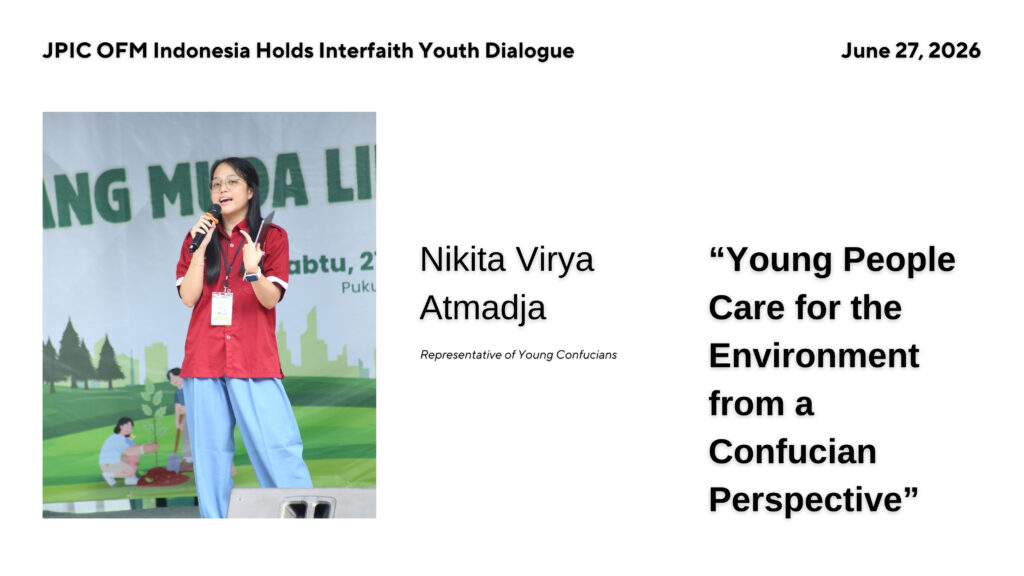
Appreciation to JPIC OFM Indonesia for organizing the Interfaith Youth Dialogue event. This affirms that in Confucian teachings, preserving the environment is not merely a trend or incidental program, but rather a spiritual calling and a fundamental form of devotional practice.
Ecological Foundations of Confucianism: The Harmony of San Cai
Explains the basic concept of San Cai (Three Primary Elements) in Confucian teachings: Tian (God/Heaven), Di (Earth/Nature), and Ren (Human Being).
These three elements are interconnected and inseparable. A person’s spiritual perfection (Ren) will not be achieved if they only maintain their relationship with Heaven and fellow human beings, while also harming Di (Earth), which shelters and sustains them.
Caring for nature is a concrete manifestation of the universal nature of Ren (Love).
The Symbolic Meaning of Nature Rituals in Confucianism
Clarifying the misconceptions surrounding the tradition of honoring or praying to nature (such as praying to Hok Tek Ceng Sin or the Earth Angel).
Emphasizing that these rituals are not a form of animism or the worship of inanimate objects.
Praying to nature is purely a symbol of gratitude for the gifts of the Earth, which provides the sources of life (food, water, air).
This ritual serves as a spiritual reminder to avoid greed and exploitation, and to always be grateful to nature.
The Role of Youth and Interfaith Messages
Quoting the essence of Mengzi’s teachings: A wise person is one who understands the limits of utilizing nature (taking only enough, cutting wood and fishing at the right time).
An invitation to all youth of all faiths that we are the next generation who will inherit this earth.
An affirmation that environmental damage stems from human greed. Therefore, interfaith collaboration is essential to build collective awareness.
Conclusion
Hopefully, harmony will not only be built vertically (toward God) and horizontally (between humans), but also downward (toward the Earth/Nature). ***