Maria Patrisia Widi Astuty Manjur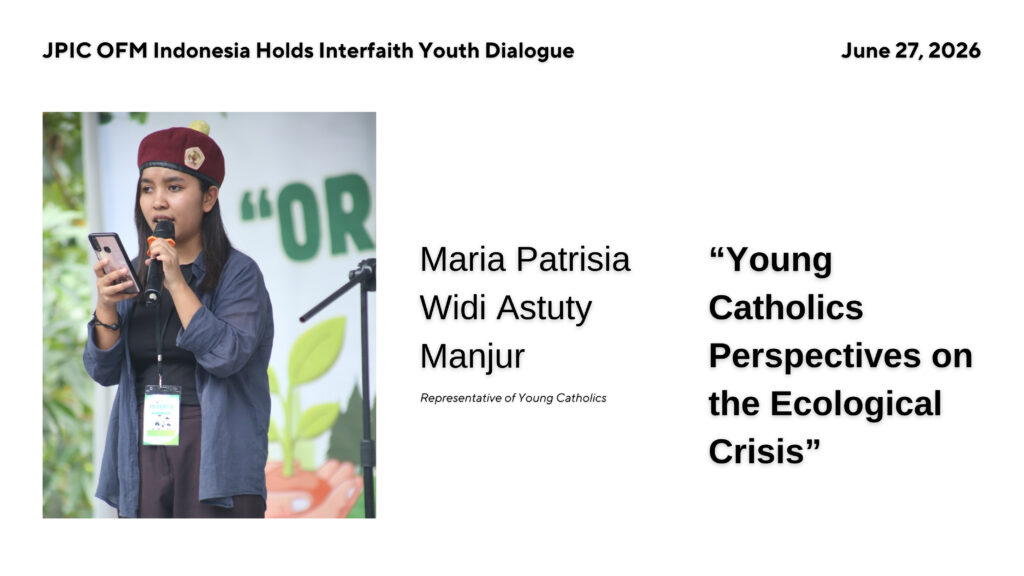
The ecological crisis in Indonesia is diverse, ranging from large-scale deforestation, air and water pollution, and the impacts of climate change. Deforestation is primarily caused by several projects, such as the government’s National Strategic Projects (PSN). As of mid-2024, the Agrarian Reform Consortium (KPA) recorded that at least 571,000 hectares of community land in 134 locations had been converted or impacted by land grabbing conflicts due to the construction of National Strategic Projects (PSN). In addition, another 1.86 million hectares of land were allocated across 11 provinces for large-scale projects such as food estates. Air and water pollution also recorded record highs, with the national Air Quality Index (IKA) at 54.78 points, while Indonesia’s annual average air pollution level was at 30 µg/m³ for fine particulate matter (PM2.5), making it the worst in Southeast Asia. Meanwhile, the impacts of climate change are evident in unpredictable extreme weather, food security, and economic losses of up to IDR 2,005 trillion.
Why is this ecological crisis occurring? (1) Socio-cultural factors: the view that nature is a commercial commodity erodes the local wisdom of indigenous communities and fuels a “high-waste” lifestyle. The population explosion in urban areas forces the conversion of green spaces into residential areas and multiplies the volume of daily waste. (2) Political factors: weak law enforcement and the close relationship between those in power and capitalists have resulted in regulations that facilitate permits for large-scale land exploitation. (3) Economic factors: reliance on the exploitation of raw natural resources to pursue short-term economic growth neglects investment in environmental restoration. (4) Technological factors: the slow transition to clean energy and the lack of industrial waste processing infrastructure.
In our opinion, the ecological crisis requires a multidimensional approach, ranging from pro-environmental policies and global ethics to the integration of science, which is now beginning to penetrate every aspect of human life. Meanwhile, the Catholic Church comprehensively outlined the ecological crisis through its 2015 Encyclical Letter Laudato Si’, which called for a global “ecological conversion” to care for the earth as our common home through the concept of integral ecology, which combines social justice for the poor and environmental sustainability. Pope Francis’ Apostolic Exhortation Laudate Deum (2023) is a strong rebuke urging immediate action, as the global climate crisis is approaching a critical point due to the slow pace of global political commitment.
Finally, it is crucial to adopt an environmentally friendly lifestyle and actively advocate for the environment to encourage a more just green transition policy. Furthermore, the government must have the courage to firmly enforce the law without discrimination against corporations that destroy the environment and stop regulations that facilitate large-scale exploitation of nature. ***